There was a time when knowing how to make things wasn’t considered a hobby.
It was simply part of life.
People made soap because the family needed soap. They cooked because dinner needed to be on the table. They planted gardens because food came from the garden. They repaired things because replacing them wasn’t always an option.
They preserved what they could.
They saved what they could.
They used what they had.
And, perhaps most importantly, they knew how to do things.
Somewhere along the way, many of those everyday skills became what we now call old-fashioned.
And I think we’ve lost something along the way.
Not everything about the past was better. I have no desire to give up my washing machine, indoor plumbing, or modern medicine. I’ll happily keep all three, thank you very much.
But I do think there are some things worth remembering.
The ability to make something instead of automatically buying it.
The ability to repair something instead of immediately replacing it.
The ability to grow something, preserve something, cook something, or simply figure out how something works.
These skills aren’t important because we need to recreate the past.
They’re important because knowing how to do things gives us a kind of independence that is easy to lose when almost everything is available at the push of a button.
There Is Value in Knowing How to Make Things Yourself
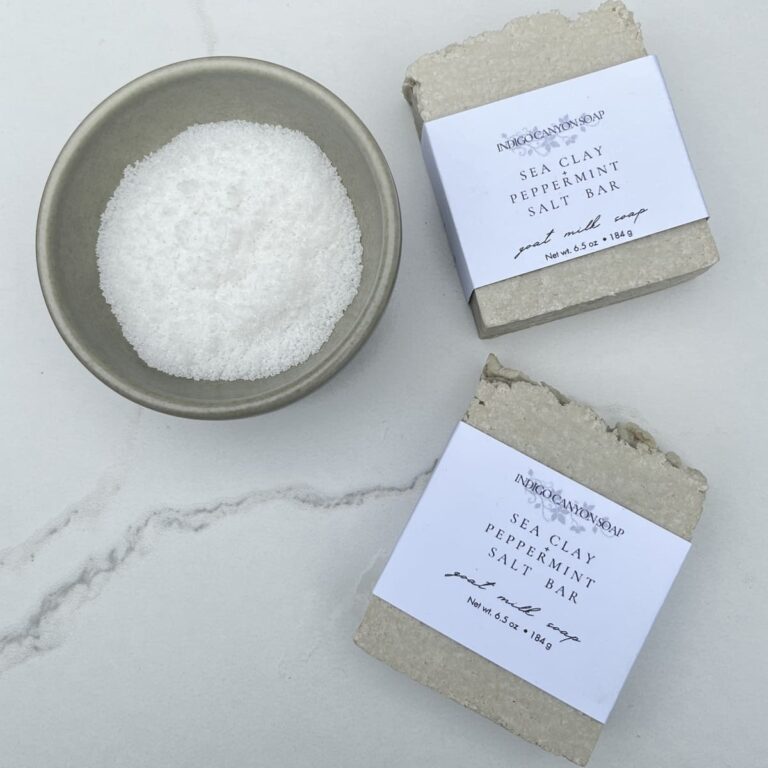
One of the reasons I love making soap is that I know exactly what went into it.
I measure the oils.
I choose the fragrance.
I make the batch.
I cut the bars.
And eventually, I have something sitting on my counter that didn’t exist there a few days before.
I made that.
There’s a particular satisfaction in that.
We live in a world where almost anything can be ordered with a few taps on a phone and delivered to our front door.
That’s convenient.
And I am certainly not complaining about convenience. There are plenty of days when having something delivered to my front door feels like a modern miracle.
But convenience can also make it easy to forget how satisfying it is to make something yourself.
When you make something with your own hands, you aren’t simply producing an object.
You’re learning.
You’re practicing.
You’re paying attention.
And you’re building confidence.
The next time something needs to be done, you know a little more than you did before.
You Don’t Have to Make Everything Yourself
This is important.
I’m not suggesting we return to a world where everyone is expected to make every meal from scratch, grow every vegetable, sew every piece of clothing, preserve enough food for an entire winter, and somehow have time left over to polish the silver.
That sounds exhausting.
And frankly, I have things to do.
The point isn’t to reject modern convenience.
The point is to be intentional about which conveniences we depend on and which skills we want to keep.
There are things I enjoy making because I genuinely like making them.
Soap is one of them.
There are things I make because I want to know how.
And there are plenty of things I happily buy because life is short.
I don’t think self-sufficiency means doing everything yourself.
I think it means knowing that you can do more than you thought you could.
We don’t need to do everything ourselves.
But we shouldn’t lose the ability to do anything ourselves.
There Is Freedom in Knowing How
There’s something reassuring about knowing how to make a few basic things.
If you know how to cook a meal from basic ingredients, you have a skill.
If you know how to grow a few vegetables, you have a skill.
If you know how to preserve food, mend something, make soap, bake bread, or repair a household item, you have a skill.
None of these things makes you completely self-sufficient.
But each one makes you a little less dependent on someone else to solve every problem for you.
And I think that’s valuable.
Not because we should be afraid of the world.
Quite the opposite.
Because knowing how to do things gives you confidence in the world.
When something breaks, you might be able to fix it.
When you have extra produce, you might know how to preserve it.
When you need a gift, you might be able to make one.
When you run out of something, you might know how to create a substitute.
These aren’t revolutionary skills.
They’re simply useful ones.
And useful knowledge has a way of staying with you.
Old-Fashioned Doesn’t Have to Mean Difficult
Sometimes we romanticize the past a little too much.
We picture a beautiful farmhouse kitchen, a basket of fresh eggs, homemade bread cooling on the counter, and a woman in a linen dress casually making jam while the sun shines through the window.
Meanwhile, nobody mentions that preserving food for an entire household was actual work.
A lot of the old ways were hard.
They were necessary because people didn’t have the conveniences we have today.
But some of those methods can still teach us something.
We don’t have to recreate the hardship.
We can keep the wisdom.
That’s an important distinction.
I don’t want to live exactly like my great-grandmother did.
I want to carry forward some of the things she knew.
Making Things Slows You Down
This may be one of the things I appreciate most.
Making something requires your attention.
You can’t always rush it.
You have to measure.
Stir.
Wait.
Watch.
Adjust.
Learn.
Soapmaking is a perfect example.
Once everything is mixed and the process is underway, you have to pay attention to what’s happening in front of you.
You can’t simply click a button and walk away.
And there’s something good about that.
Our lives are filled with things designed to save us time.
Yet somehow, many of us feel like we have less time than ever.
Maybe we don’t always need another shortcut.
Maybe sometimes we need something worth slowing down for.
There Is Something to Be Said for Using What You Have
One of my favorite old-fashioned ideas is simply this:
Use what you have.
Before buying something new, ask:
Can I repair this?
Can I reuse it?
Can I repurpose it?
Can I make something with what I already have?
Can I learn how to do this instead of paying someone else?
That doesn’t mean never buying anything.
It means breaking the habit of automatically assuming that every problem requires a purchase.
Sometimes the answer is already sitting in your garage, pantry, sewing basket, kitchen drawer, or backyard.
You just need to look at it differently.
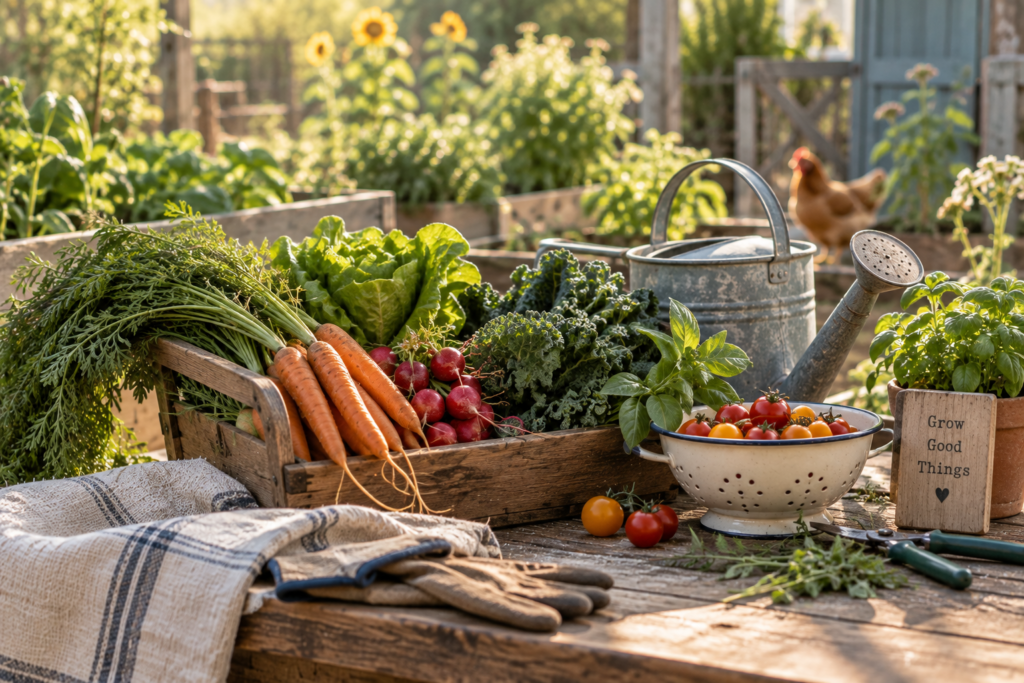
There’s a certain resourcefulness in learning to see possibilities in the things you already have.
And resourcefulness is a skill worth keeping.
Homemade Doesn’t Have to Be Perfect
There’s another lesson I think we’ve lost somewhere along the way.
Things don’t have to be perfect to be useful.
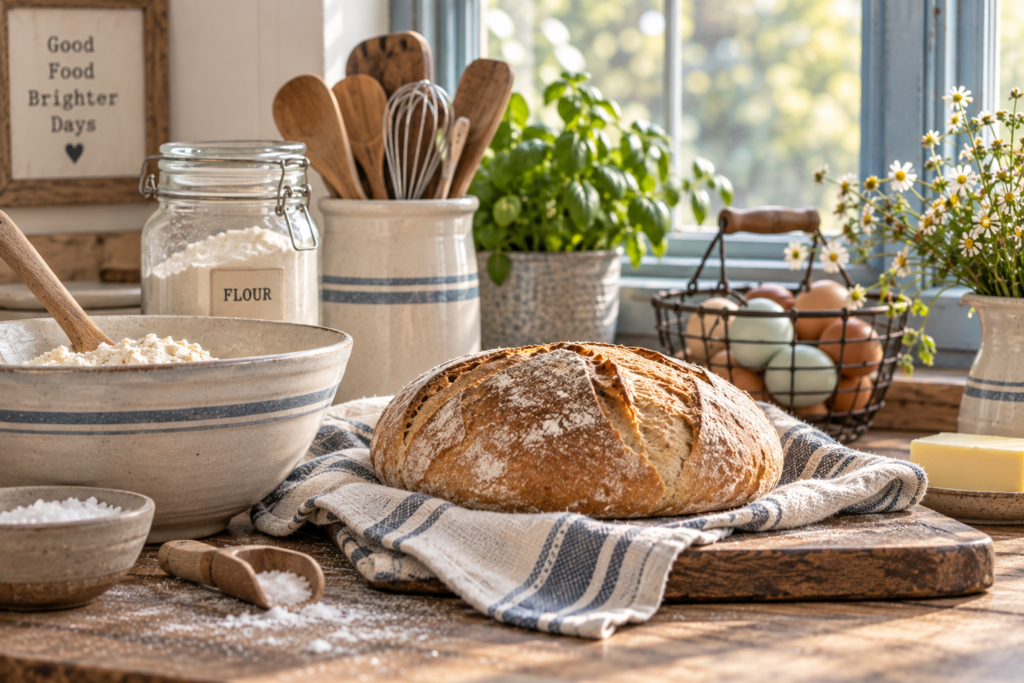
A homemade loaf of bread might be a little lopsided.
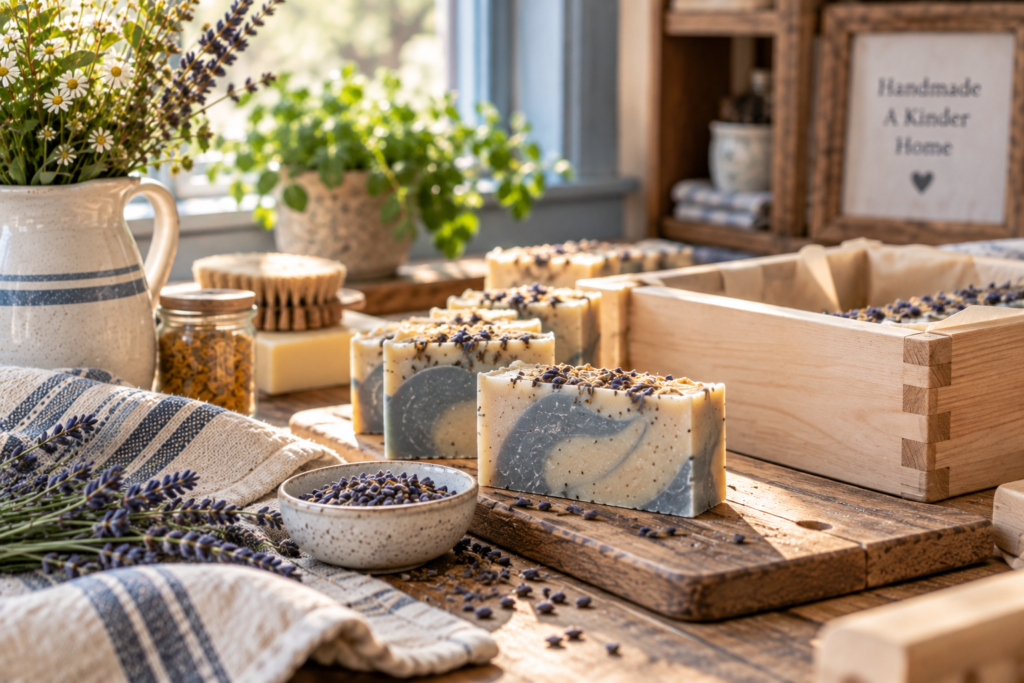
A handmade bar of soap might have an imperfect swirl.
A garden might have weeds.
Your homemade preserves might not look like something from a magazine.
That’s okay.
There is beauty in things that show the hand of the person who made them.
I don’t want everything in my home to look factory-perfect.
I want some things to look like someone cared enough to make them.
And sometimes the imperfections are part of the story.
Learning Old Skills Is About More Than Saving Money
Saving money is certainly part of it.
Cooking at home can save money.
Growing some of your own food can help stretch a grocery budget.
Making gifts can sometimes cost less than buying them.
Repairing something can be cheaper than replacing it.
But I don’t think saving money is the whole reason to learn these skills.
There’s value in competence.
There’s value in creativity.
There’s value in knowing where something came from and how it was made.
There’s value in being able to solve a problem without immediately reaching for your wallet.
And there’s something deeply satisfying about being able to say:
I know how to do that.
Maybe We Don’t Need to Go Backward
I don’t think the answer is to reject everything modern and pretend the past was perfect.
It wasn’t.
People worked incredibly hard.
They had fewer choices.
They had problems we are fortunate not to face in the same way.
We can appreciate modern conveniences while still preserving the skills that came before them.
That’s what I want.
Not to go backward.
To carry something forward.
The knowledge.
The resourcefulness.
The patience.
The willingness to work with our hands.
The understanding that a home isn’t simply a place where we consume things.
It’s a place where we can make, grow, repair, preserve, teach, and create.
I’m Still Learning
I’m certainly not an expert at all of this.
I’m learning as I go.
Some projects work.
Some don’t.
Some things save money.
Some things probably cost me more than buying them would have.
And some things I make simply because I enjoy them.
That’s enough.
I don’t think we need to turn old-fashioned skills into another competition.
You don’t need a perfect homestead.
You don’t need a huge garden.
You don’t need to make every meal from scratch.
You don’t need to make your own clothes or churn your own butter.
Start with one thing.
Learn how to make a loaf of bread.
Plant a tomato.
Learn to preserve something.
Try making soap.
Repair something instead of throwing it away.
Make something for your family with your own hands.
Then do another thing when you’re ready.
Little by little, you build a different kind of independence.
And perhaps that’s the real reason I keep coming back to these old-fashioned ways.
It’s not because I think the past was perfect.
It’s because I think some things are worth remembering.
The satisfaction of making something useful.
The pride of learning a skill.
The wisdom of using what you have.
The patience to do something properly.
And the simple pleasure of looking at something you’ve made with your own two hands and thinking:
I did that.
We don’t have to live exactly as our grandparents did.
We don’t have to reject modern conveniences.
We don’t have to make everything from scratch.
But we shouldn’t forget how to make things ourselves.
Because every time we learn an old skill, we carry a little piece of practical knowledge forward.
And maybe that’s what matters most.
**Not going backward.
Not trying to recreate the past.
Just remembering that we are capable of more than simply buying our way through life.**
Maybe old-fashioned isn’t such a bad thing after all.
Ready to Make Something Yourself?
If you’ve been thinking about learning an old-fashioned skill, why not start with something simple?
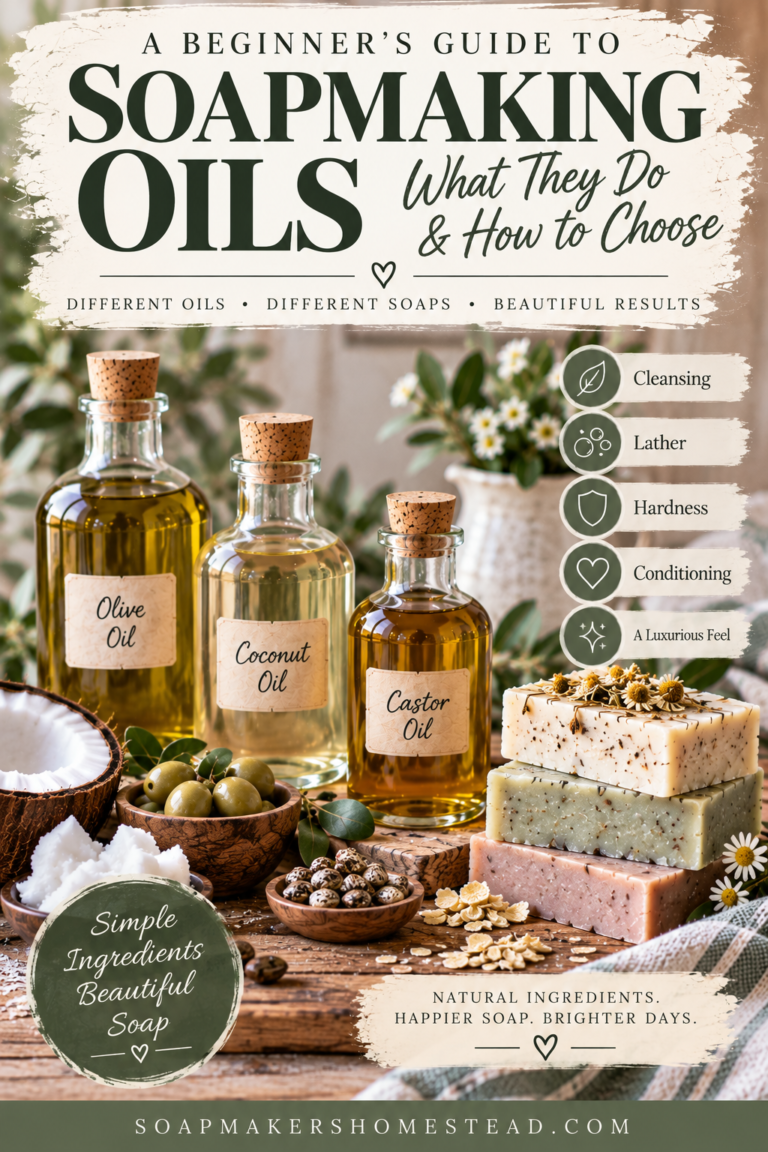
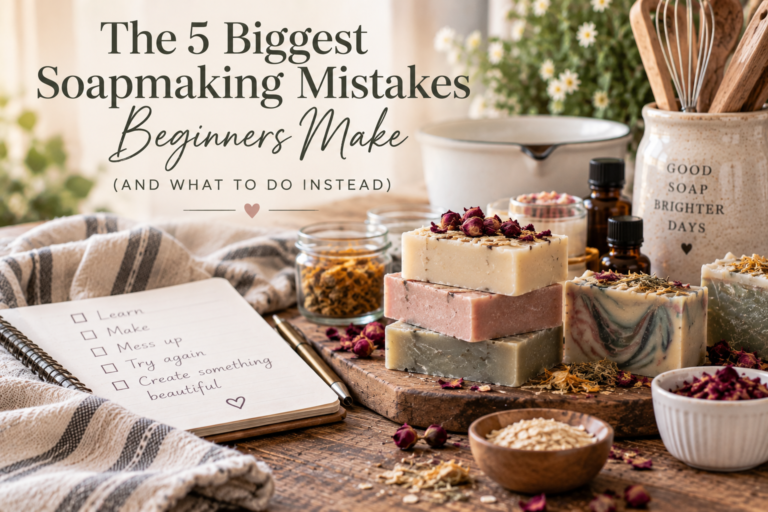
Soapmaking is one of those skills that looks intimidating from the outside but becomes surprisingly approachable once you understand the basics.
Get my Free Soapmaking Guide
You’ll get five beginner-friendly recipes you can try at home, along with a simple introduction to making your own handmade soap.
You don’t have to learn everything at once.
Start with one recipe.
Make something with your own hands.
And see where it takes you.